How to Optimize Your Airbnb Listing in Costa Rica: The Complete Host Guide
Getting your listing in front of travelers is only half the battle. The other half is convincing them to book. For Costa Rica vacation rentals, where the market includes everything from basic condos in Jacó to luxury villas in Los Sueños, nailing your Airbnb listing optimization is the difference between a calendar that fills and one that gaps.
This guide covers what actually moves the needle, backed by how Airbnb’s algorithm works and what the data says about what converts browsers into bookers.
How Airbnb’s Search Algorithm Works
Airbnb’s search algorithm is not a black box you can hack with keyword stuffing. It is a relevance engine that evaluates your listing description, title, photo captions, amenities, pricing, house rules, and a handful of behavioral signals to decide where you appear in search results.
The algorithm evaluates two broad categories simultaneously: listing quality and guest preferences. Listing quality is determined by your historical performance (reviews, response rate, cancellation rate). Guest preferences are personalized based on trip dates, group size, and search filters the traveler applies.
According to Airbnb’s own documentation, the algorithm rewards listings that are:
- Complete. Every amenity field filled, every photo captioned, a full description written. Incomplete listings get penalized in search visibility.
- Responsive. Response rate above 90% and fast response times (under an hour when possible) signal reliability to the algorithm.
- Reliable. A cancellation rate under 1% is a hard requirement for Superhost status and a soft requirement for strong rankings.
- Well-priced relative to the market. Listings that are significantly overpriced for their market cluster tend to show up less often, particularly with travelers who use price filters.
Many hosts report that new listings receive increased visibility within the first 24-72 hours after publishing. While Airbnb has not officially documented this as an algorithm feature, the pattern is widely observed in the hosting community and likely reflects Airbnb’s interest in giving new hosts a fair chance to accumulate reviews before ranking is fully determined by historical performance.
Note: Airbnb periodically updates its algorithm and policies. The factors and requirements described here reflect what was publicly available as of early 2025. Check Airbnb’s official Resource Center for the most current guidance before making significant changes to your listing strategy.
Photography That Actually Converts
Photos are the first thing travelers see, and they make the booking decision before they read a single word of your description. Listings with professional-quality photography consistently show better click-through rates, and properties with more bedrooms tend to appear in a wider range of search queries simply because they match more group sizes.
For Costa Rica properties specifically, guests are booking as much about the environment as the interior. Your photography strategy needs to reflect that.
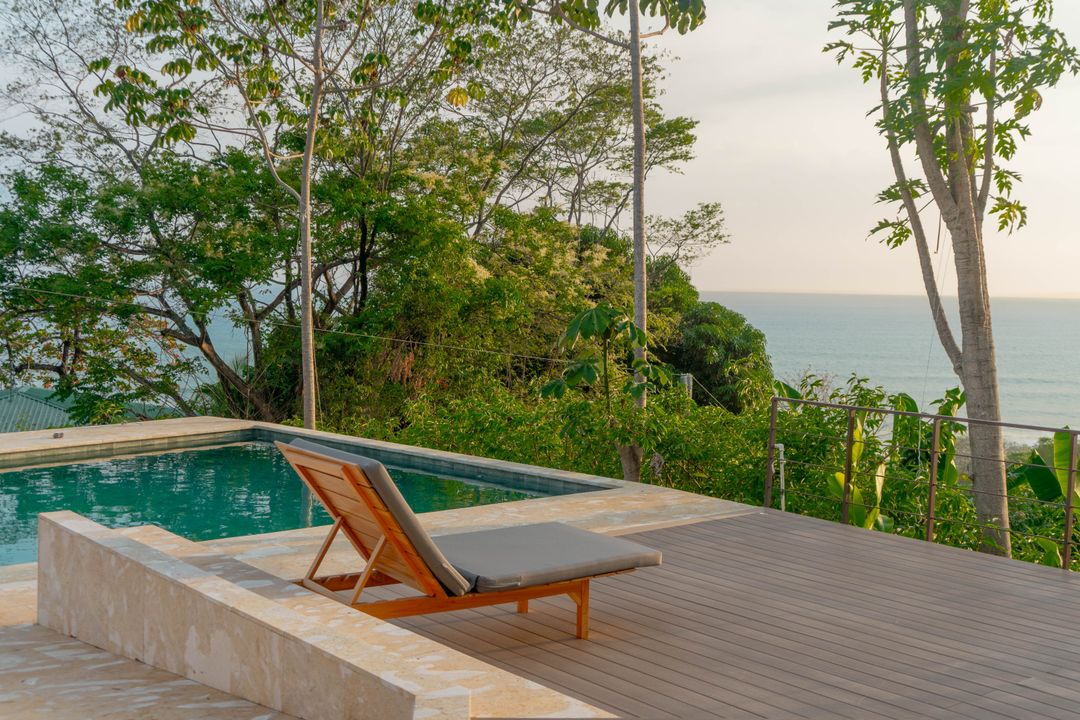
Shoot the exterior first. The main listing photo should show your best angle. For most Costa Rica vacation homes, that means the pool, the view, or the outdoor living space. Travelers scrolling through dozens of listings in Jacó or Los Sueños are looking for reasons to stop. A blurry sunset shot taken from a phone is not going to do it.
Cover the full indoor story. Include every bedroom, each bathroom, the kitchen, and living areas. Use a wide-angle lens to capture roominess, but avoid extreme fisheye distortion that makes spaces look unnatural. Declutter before shooting: remove personal items, excess toiletries, and anything that reads as “lived in.”
Add context to tropical settings. If your property sits on a jungle hillside, photograph the wildlife you might see from the deck. If you are near a surf break, show the path to the beach. These details do not just sell the listing, they answer the unspoken question in every traveler’s mind: “What will it actually feel like to wake up there?”
Caption every photo. This is a step most hosts skip, but Airbnb’s algorithm uses photo captions as content signals. A caption like “Sunset from the pool deck, Herradura Bay” is more useful to the algorithm and to a guest than an empty slot. Write captions that describe what is in the photo and what makes it worth noticing.
Aim for 20 to 30 photos minimum. More if your property has distinctive spaces or outdoor features. You can upload up to 100.
Writing a Listing Description That Books
The description is where you close the deal after the photos have opened it. The mistake most hosts make is writing a description that lists features without painting a picture.
Instead of: “The house has a pool, WiFi, air conditioning, and a fully equipped kitchen.”
Write: “The pool faces west, which means you will watch the sun drop into the Pacific from the water. The kitchen has a gas stove (rare in Costa Rica, most are electric) and a French press with local Tarrazú coffee waiting for you. Fiber WiFi keeps video calls smooth if you need to work, and every bedroom has its own split-unit AC for sleeping comfort.”
The second version is specific. It answers questions a guest did not know to ask. It mentions the gas stove because someone who cooks will notice the difference. It mentions Tarrazú coffee because that is the detail that makes a Costa Rica stay feel real.
Structure your description in short sections with clear headings. Travelers skim. A heading that reads “The Kitchen” or “What to Expect at Check-In” is easier to digest than a wall of prose.
Fill out every optional field Airbnb provides. Missing amenities in the structured fields means your listing will not appear in filtered searches where travelers specify “hot tub” or “washer.”
Pricing Strategy for the Costa Rica Market
Pricing is the factor most directly under your control, and the one that Airbnb’s algorithm weighs heavily when comparing your listing to others in the same cluster.
Understand the three seasons. Costa Rica operates on a distinct three-season calendar that most North American hosts do not initially appreciate.
- Peak season (December to April): Dry weather, highest tourist volume. Nightly rates should be 30-50% higher than your shoulder season baseline. A property renting for $200 per night in June can realistically command $260 to $300 during Christmas, New Year, and Easter week.
- Green season (May to November): Rain increases, tourist volume drops, but this is when digital nomads and long-term renters appear. Offering discounted monthly rates (20-30% off) can keep your calendar full when short-term demand is soft.
- Shoulder periods: May and November tend to transition. Rates sit between green and peak season. Use dynamic pricing tools that update nightly rates based on local demand signals.
Use dynamic pricing. Do not set a rate and forget it. Tools like PriceLabs, Wheelhouse, or Airbnb’s native Smart Pricing adjust your nightly rate based on local event calendars, competitor pricing, and booking lead time. During a major surf competition in Santa Teresa or a holiday weekend in Los Sueños, manual pricing cannot keep up.
Calculate your floor rate. Your rate needs to cover your mortgage or ownership costs, cleaning, utilities, platform fees, and leave a reasonable net margin. For most Costa Rica properties in the Central Pacific corridor, a nightly floor below $120 to $150 for a 2-bedroom will struggle to cover costs once all expenses are factored. Knowing this number prevents the trap of underpricing during peak demand periods.
For a closer look at pricing mechanics specific to this market, see our guide to vacation rental pricing in Costa Rica.
Superhost Status: Why It Matters and How to Get It
The Superhost badge is not just a vanity marker. According to Airbnb’s Q3 2022 data, the typical Superhost earned roughly 64% more than regular hosts — driven primarily by higher occupancy and better search visibility. They receive a visible boost in search rankings, and the badge signals reliability to guests browsing multiple listings.
The four requirements for Superhost status, as of Airbnb’s current policy:
- Booking volume: At least 10 reservations completed, or 3 reservations that total 100 nights across 3 separate stays, within the past 365 days.
- Cancellation rate: Less than 1%, with exceptions for Major Disruptive Events or other Airbnb-approved reasons.
- Response rate: 90% or higher. Every unanswered inquiry hurts this metric.
- Overall rating: 4.8 or higher, based on guest reviews across all stays.
For property managers handling multiple listings, maintaining Superhost status across all properties requires systematizing communication and cleaning handoffs. A single missed inquiry or last-minute cancellation can drop your response rate below the threshold.
Review Management: The Virtuous Cycle Starts Here
Reviews are not just social proof. They are a direct algorithmic signal. Airbnb’s algorithm treats listings with higher ratings as more trustworthy, which means more impressions in search results.
The most effective review strategy begins before the guest checks out. Send a brief, warm message the day before departure thanking them for their stay and noting that you hope they will share their experience. A satisfied guest who did not think to review will often do so after that nudge.
Respond to every review, positive and negative. A response to a 5-star review is a chance to reinforce your brand and thank the guest by name. A response to a critical review is an opportunity to demonstrate professionalism to future guests who read the thread.
When a negative review is unfair or factually incorrect, you can request removal through Airbnb’s official process. Removals are granted only for reviews that contain profanity, discrimination, or statements that are objectively not about the stay. Disagreements about taste or preference are not removable.
For Costa Rica properties specifically, set clear expectations about things that are part of the local environment but may surprise first-time visitors. The sound of howler monkeys at dawn is not a defect, but a guest who was not warned about it may mention it in a review anyway. Proactive communication about local wildlife, seasonal weather patterns, and road conditions reduces the chance of surprise-related negative reviews.
Calendar Management and Booking Flexibility
Airbnb’s algorithm favors listings with open calendars. A calendar full of blocked dates signals to the algorithm that the listing is not actively seeking bookings, which reduces visibility.
Keep your calendar updated in real time. If you know a set of dates is unavailable, block them immediately. If you open dates you previously blocked, that update also gets a positive signal from the algorithm.
Consider Instant Book. Listings with Instant Book enabled tend to rank higher because they remove friction from the booking process. For property managers, the trade-off is the inability to screen guests in advance. If you are using a professional management company like Nest Stays, this concern is mitigated by our guest vetting and concierge support.
Minimum stay requirements can be set differently by day of week. During peak season in Costa Rica, many properties require 5 to 7 night minimums, particularly around Christmas, New Year, and Easter week. Setting shorter minimums during the green season can attract the digital nomad crowd who are looking for 2 to 4 week stays.
Lead time settings matter too. Allowing same-day or next-day bookings makes your listing visible to last-minute travelers, which can help fill calendar gaps. However, if you need preparation time between guests, set a minimum lead time that reflects your cleaning and turnover window.
Seasonal Adjustments for Costa Rica
The Costa Rica vacation rental market moves differently than most North American or European markets. Understanding these rhythms is essential for keeping your calendar full year-round.
December through April is your gold window. This is dry season. North American and European travelers are escaping winter. Families with school-age children plan trips around holiday breaks. The highest ADRs (average daily rates) are achieved during this period. Do not leave money on the table with off-season pricing during December.
May through November requires repositioning. This is not the off-season. This is the season for digital nomads, retirees on extended trips, and adventure tourists who prioritize lower costs over guaranteed sunshine. Market your listing for longer stays, remote work amenities (reliable WiFi is non-negotiable), and access to waterfalls, wildlife, and green jungle landscapes at their most dramatic.
July and August are a pocket peak. Many European travelers take summer vacations in July and August. This creates a secondary demand window in Costa Rica that is distinct from the December peak. Do not treat July as a green-season month for pricing purposes in markets like Jacó and Santa Teresa.
Events drive spikes. ISA-sanctioned surf competitions in Santa Teresa, Los Sueños fishing tournaments, and major holidays (Christmas, New Year, Easter) all create concentrated demand windows. Dynamic pricing tools should be configured to recognize these dates and adjust rates accordingly.
Common Mistakes Costa Rica Hosts Make
A few patterns show up repeatedly among property owners who struggle to fill their calendars:
Pricing as if it is a hotel. Vacation rentals in Costa Rica compete on space, privacy, and experience, not just location. A 2-bedroom villa with a private pool should not be priced like a hotel room in San José. Factor in the value of what you are offering: outdoor space, kitchen, ocean view, and proximity to the beach.
Skipping the pre-arrival guest briefing. Guests landing in San José and driving to your property in the dark do not know which turn to take at the Herradura junction. Send them a pre-arrival message with directions, what to expect at check-in, and a few local recommendations. This reduces check-in support requests and sets a tone of thoughtful hospitality.
Underestimating cleaning turnover. In a tropical climate, properties develop musty odors faster than in temperate zones. Professional cleaning between every guest, with particular attention to linens, kitchen surfaces, and outdoor furniture, is non-negotiable for maintaining 5-star ratings.
Ignoring the listing’s photo rotation. If your listing has been live for more than a year with the same photos, refresh them. Lighting conditions change, furnishings wear, and new properties enter the market. An updated photo set signals an actively managed listing to both the algorithm and travelers browsing.
Ready to Put This Into Practice?
Optimizing your Airbnb listing is not a one-time project. The most successful Costa Rica hosts treat it as a monthly practice: reviewing their search ranking, adjusting photos, refreshing the description, and monitoring how their calendar converts against competitors in their market cluster.
If you are just getting started with vacation rental ownership in Costa Rica, our getting started guide for property owners covers what you need to know before you list.
For specific help with pricing, dynamic rate management, or full-service property management that keeps your listing performing at its best, get in touch with Nest Stays.
- https://www.airbnb.com/resources/hosting-homes/a/how-to-become-a-superhost-702 (Superhost requirements, 2025)
- https://osapropertymanagement.com/understanding-costa-ricas-rental-seasons-for-maximum-profit/ (Costa Rica seasonal pricing)
- https://learn.10xbnb.com/airbnb-seo/ (Airbnb SEO strategy and algorithm factors)
- https://rankbreeze.com/airbnb-algorithm/ (Airbnb ranking factors and 11 optimization tips)
- https://www.airdna.co/blog/airbnb-seo (AirDNA research on bedrooms and SEO ranking)
- https://www.airbnb.com/help/article/39 (Airbnb search algorithm documentation)
Ready to Experience to Optimize Your Airbnb Listing in Costa Rica: The Complete Host Guide?
Book your Costa Rica vacation rental with Nest Stays and make this your base for it all.