Surf Lessons in Costa Rica: Pricing, Best Time to Go, and What to Actually Expect
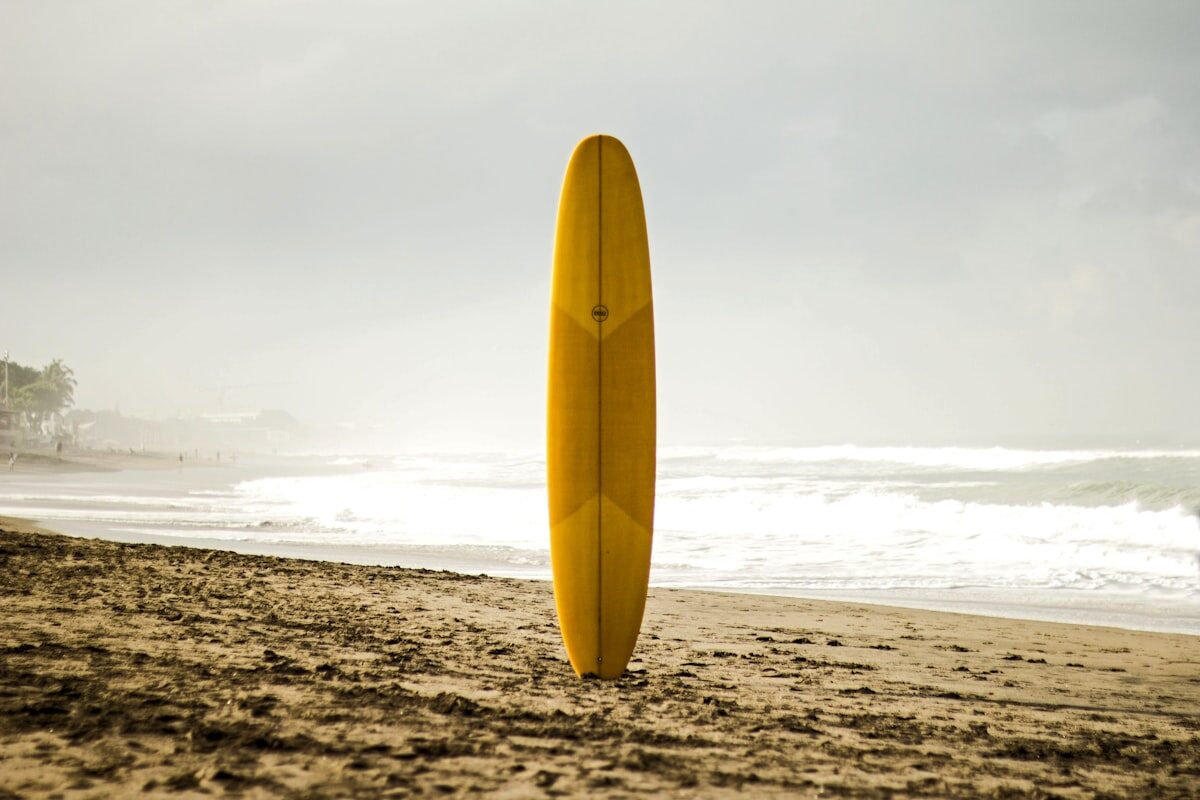
If you’re staying in Jacó, Los Sueños, or Herradura and want to learn to surf, you picked one of the best places in Costa Rica to do it. Warm water year-round, consistent waves that don’t punish beginners, and surf schools with instructors who’ve spent years teaching people to stand up on boards.
Here’s what surf lessons in Costa Rica actually cost, when to go, and what your first session will look like.
Current Surf Lesson Pricing — 2026
Group lessons: $55 to $65 per person
Private lessons: $59 to $80 per person
Standard lesson duration: 2 hours
The pricing below reflects 2026 rates from established surf schools operating on Jacó Beach. All lessons include a surfboard (soft-top foam board for beginners), rash guard, and a certified instructor.
Jacó Surf School Pricing Comparison
| Surf School | Group Lesson | Semi-Private | Private | One-on-One |
|---|---|---|---|---|
| Surfer Factory | $55 | — | $59 | $80 |
| Tortuga Surf Camp | $60 | $70 | $80 | — |
| Jaco Beach Surf School | $65 | — | $80 | — |
Prices as of March 2026. Group lessons typically have 3-8 students per instructor. Semi-private = 2 students. Private = 1-on-1.
What’s always included: surfboard, rash guard (no wetsuit needed; the water stays at 82-85°F), 2-hour session (about 30 minutes beach instruction + 90 minutes in the water), and a certified instructor.
What costs extra: hotel pickup from Los Sueños or Herradura ($10-20), lesson photos or video ($15-25), and tips for your instructor (10-15% is standard if you had a good experience).
What’s never included: sunscreen (bring reef-safe), towel, meals.
If you’re booking through a hotel concierge or tour aggregator, expect to pay $10-20 more per person than booking directly. Most surf schools have WhatsApp numbers on their websites. Message the night before, confirm the time, and meet them at the beach.
Group vs. Private Lessons: The Honest Comparison
This is the question most people agonize over. Here’s the straightforward breakdown.
Group Lessons ($55-$65)
Groups typically have 4 to 8 students per instructor. You all go through the same beach orientation, then practice together in the water. The instructor rotates attention across the group.
Go with a group lesson if:
- It’s your first time on a surfboard and you have no idea what to expect
- You’re traveling with family or friends who all want to learn together
- You want the lower-stakes, social version of learning (everyone’s falling, nobody cares)
- You’re on a budget
The truth about group lessons: for absolute beginners, the gap between group and private instruction isn’t as wide as you’d think. The core moves (paddling, popping up, riding whitewater) are the same for everyone. You’ll still stand up on a wave. The feedback is just less personalized.
Private Lessons ($59-$80)
One instructor, all their attention on you. They can adjust to your specific weaknesses, push you to slightly bigger waves if you’re progressing fast, and spend the session fixing the one thing that’s holding you back.
Go with a private lesson if:
- You’ve surfed a few times and want to actually get better, not just survive
- You’re a confident athlete who learns quickly and will outpace a group
- You’re solo and don’t want to wait for a group session to fill up
- You’re nervous and need extra patience from an instructor
The upgrade from group to private costs $15-25 more per person. For most first-timers, it’s not necessary. For anyone who’s surfed before and wants to move beyond the foamy whitewater, it’s worth it.
Semi-Private Lessons
Two students, one instructor. This is the sweet spot that doesn’t always get advertised, so ask if the school offers it. You get more attention than a group lesson without paying full private rates. Especially useful for couples or two friends with similar experience levels who want to learn together but also get real feedback.
What to Expect: Your First Surf Lesson
This is what actually happens during a 2-hour beginner lesson.
On the Beach (First 20-30 Minutes)
Your instructor will cover four things: how to paddle efficiently, how to pop up (the move from lying flat to standing), ocean safety, and wave etiquette. You’ll practice the pop-up on the sand 10 to 15 times.
A few things nobody tells you before this part: the pop-up feels completely unnatural the first dozen times. Your back foot keeps landing in the wrong spot. Your timing is off. The instructor will correct you, and you’ll keep drilling it anyway. This is normal and it’s how the lesson is supposed to go.
In the Water (Next 60-70 Minutes)
You’ll start in waist-deep water catching whitewater waves (the broken foam that rolls toward shore after a wave has already finished breaking). Your instructor will push you into waves at first, calling when to paddle and when to stand.
The first several waves: you fall. Maybe you half-stand. You get a mouthful of salt water, laugh about it, paddle back, and try again.
Somewhere around wave five to ten, it clicks. You pop up, catch your balance for a second or two, and ride the whitewater toward shore. That’s the moment most people decide they need to surf more.
After you can catch a few on your own, the instructor moves you out a bit deeper to start catching waves without being pushed. By the end you’ll be exhausted, salt-crusted, and grinning.
Last 20-30 Minutes
Mostly repetition. Paddle, pop up, fall or ride, paddle back. Your instructor gives you feedback between attempts: keep your chest up, move your back foot, look toward shore (not at your feet). The corrections feel small but they’re compounding.
What to bring: Reef-safe sunscreen (apply before you get in the water), a rash guard if you run hot, water shoes if your feet are sensitive. The sand at Jacó can be rough on tender feet in the midday heat.
After the lesson: Your arms will be more tired than you expect. Paddling uses muscles most people don’t train specifically. Budget some recovery time before anything else strenuous that day.
Best Time of Year for Surf Lessons
Jacó has surf year-round. The question isn’t whether there are waves — it’s what kind, and what the weather looks like.
Dry Season (December through April)
The mornings are clean. Offshore winds smooth out the wave faces and make them easier to read and ride. Weather is predictable: sunny, hot, no rain until evening at the earliest. Tourist numbers peak around spring break (mid-March through April), but the water itself doesn’t get crowded enough to matter for beginner lessons.
Best months for first-timers: January and February. Waves are consistent and manageable, mornings are glassy, and it’s not yet peak tourist season.
Watch out for: March and April can see smaller waves. Still learnable, but if you want to progress to green waves, you might spend a lot of time waiting for sets.
Rainy Season (May through November)
The afternoon rains cool things down, which feels great after a morning in the water. Swells are bigger and more frequent. Good news for intermediate surfers, more challenging for beginners who are still getting comfortable in the whitewash.
Best months for beginners: June and July. Waves have more size than dry season (fun once you can handle it) but not the overhead+ swells of August through October. You get the added benefit of far fewer tourists.
Skip for beginners: August, September, October. These months bring the strongest swells on the Central Pacific coast. Experienced surfers come specifically for this period. First-timers will spend most of the lesson getting knocked around. Wait until November when things calm back down.
Year-Round Factors
The water temperature never changes enough to matter: 82-85°F all year. You don’t need a wetsuit. You do need sunscreen regardless of season. Equatorial sun in the water is serious, even on overcast days.
Morning sessions (7-10 AM) are consistently better than afternoon. Winds tend to go onshore (choppy, messy waves) by midday. Every reputable surf school in Jacó runs their beginner lessons in the morning for this reason.
Surfing from Los Sueños and Herradura
If you’re staying in the Los Sueños resort community or nearby Herradura, you’re about 15-20 minutes from Jacó Beach. Herradura Bay is calm and protected, better for swimming and paddleboarding than waves. For actual surf lessons, you’ll go to Jacó.
Most surf schools offer transportation pickups from the Los Sueños / Herradura area for $10-20 per group. It’s worth asking when you book. Some guests arrange this through their rental concierge before they arrive. Our team can help coordinate lessons and transportation so you’re not figuring out logistics on vacation.
What to know about Los Sueños guests specifically: the resort has kayaks, paddleboards, and access to the beach club, but for actual surf lessons with certified instruction, Jacó is your spot. It’s close enough that you can do a morning lesson and be back at the pool by noon.
How Long Does It Take to Learn to Surf?
This is the question everyone asks and nobody gives a straight answer to. Here’s the honest version.
First session: You’ll stand up on a wave. Not gracefully, probably not more than a few seconds, but you’ll do it. Most first-timers get their first successful ride within the 2-hour lesson window.
2 to 4 sessions: You can catch whitewater waves reliably on your own without being pushed. You’re starting to feel when a wave is about to hit you instead of constantly getting surprised.
6 to 15 sessions: You’re catching unbroken “green” waves, the ones that haven’t broken yet. This is the real milestone. It requires reading the ocean, positioning yourself correctly in the lineup, and timing your paddle to match the wave’s acceleration. Most recreational surfers who take a few lessons per vacation trip take 2 to 4 trips before they can do this consistently.
Beyond that: Surfing competently (turning, controlling direction, riding for more than a few seconds) takes sustained practice over months to years. People who surf every day progress in weeks. People who surf once a year on vacation take several years to get there.
The honest answer: if surfing is something you want to actually get good at, one lesson won’t do it. But one lesson is still worth it. It’s one of those experiences people talk about for years, regardless of whether they ever surf again. If you’re going to be in Jacó anyway, there’s no reason not to try it at least once.
What speeds things up considerably: ocean comfort (strong swimmers progress faster), overall athletic coordination, and having a patient instructor who adjusts to your learning style. Private lessons accelerate progress noticeably for people in the 2-to-6-session range.
Beyond the Lesson: Board Rentals
After a lesson or two, you might want to surf on your own. Board rentals in Jacó run $15 to $25 per day:
- Soft-top foam boards: $15-20/day (best for beginners, safer if you get hit)
- Fiberglass shortboards: $20-25/day (for intermediate+ surfers)
- Longboards: $20-30/day (stable, easier to catch waves, good for progressing beginners)
Most surf schools rent boards by the day or week. Multi-day rentals discount: roughly $60-80 for a week. Shops on the main strip in town also rent boards at similar prices.
If you’re at Los Sueños and want boards delivered, ask the concierge. Some rental shops will bring them to the resort area for a fee.
Choosing a Surf School
Three things actually matter when picking a school:
Instructor-to-student ratio. Group lessons with 10+ students per instructor mean you’ll spend most of the time waiting. A 1:6 ratio is good; 1:4 is better. Ask before you book.
Instructor tenure. Someone who’s been teaching in Jacó for years has seen every beginner mistake in the book and knows how to fix each one. The newer the instructor, the more you’ll feel like they’re guessing. The schools listed above all have long-tenured instructors, which is largely why they’ve stayed in business.
Direct booking. Book with the school directly (WhatsApp works well), not through a tour aggregator or your hotel concierge at a markup. Same product, $10-20 more per person otherwise.
Planning your Jacó or Los Sueños trip? Check out our complete Jacó area guide for where to stay, eat, and what else to do. If you’re a more experienced surfer interested in what’s around, Playa Hermosa is 10 minutes south and runs one of the most consistent breaks on the Central Pacific. For a full breakdown of surf conditions and breaks across the region, see our Central Pacific surfing guide.
Guests staying in Los Sueños or Herradura properties can reach out to our team for help finding and booking surf lessons during their stay.
Frequently Asked Questions
How much do surf lessons cost in Costa Rica?
Group surf lessons on the Central Pacific coast run $55 to $65 per person. Private lessons range from $59 to $80 depending on the school and instructor experience. Established schools in Jacó charge $55-$65 for group lessons and $59-$80 for private 1-on-1 instruction. Group lessons are 2 hours. Private lesson duration varies by school (Jaco Beach Surf School runs 3-hour private sessions). All lessons include a surfboard, rash guard, and certified instructor.
How long does it take to learn to surf?
Most beginners can stand up on a wave within their first 2-hour lesson. Riding whitewater confidently usually takes 2 to 4 sessions. Catching and riding unbroken ‘green’ waves comfortably takes most people 6 to 15 sessions spread over weeks or months, longer if you only surf once a year on vacation. Physical fitness, ocean comfort, and body awareness accelerate the learning curve significantly.
What is the best time of year to take surf lessons in Costa Rica?
January through March is ideal for beginners: clean offshore winds in the mornings, manageable wave sizes, and dry weather. June and July offer slightly larger waves while still being beginner-appropriate. August through October has the biggest swells, better for intermediate surfers and challenging for first-timers. The water is 82-85°F year-round, so there’s never a bad time temperature-wise.
Should I book a group or private surf lesson?
Group lessons ($55-65) are fine for most first-timers, you’ll stand up on waves, and having others around makes it more fun. Private lessons ($59-80) are worth the upgrade if you’ve surfed a few times before, want to progress quickly, or learn better with individual attention. Semi-private lessons (2 students) offer a middle ground that many schools can arrange.
Can I take surf lessons if I'm staying at Los Sueños or Herradura?
Yes. Most surf schools in Jacó offer pickup from Los Sueños and Herradura (typically a $10-20 transportation add-on). Jacó Beach is about 15-20 minutes from the resort area, and many guests from Los Sueños arrange lessons through their rental concierge. Our team can help you find and book surf lessons as part of your stay; just let us know when you check in.
Can I rent a surfboard in Jacó without taking a lesson?
Yes. Board rentals run $15-25 per day. Soft-top foam boards (best for beginners) cost $15-20/day. Fiberglass shortboards are $20-25/day, and longboards run $20-30/day. Multi-day rentals are cheaper: around $60-80 for a week. Most surf schools and shops on the main strip rent boards directly.
Ready to Experience Jacó?
Book your Jacó vacation rental with Nest Stays — and wake up right where the action is.