Sea Turtle Watching in Playa Hermosa: Complete Guide
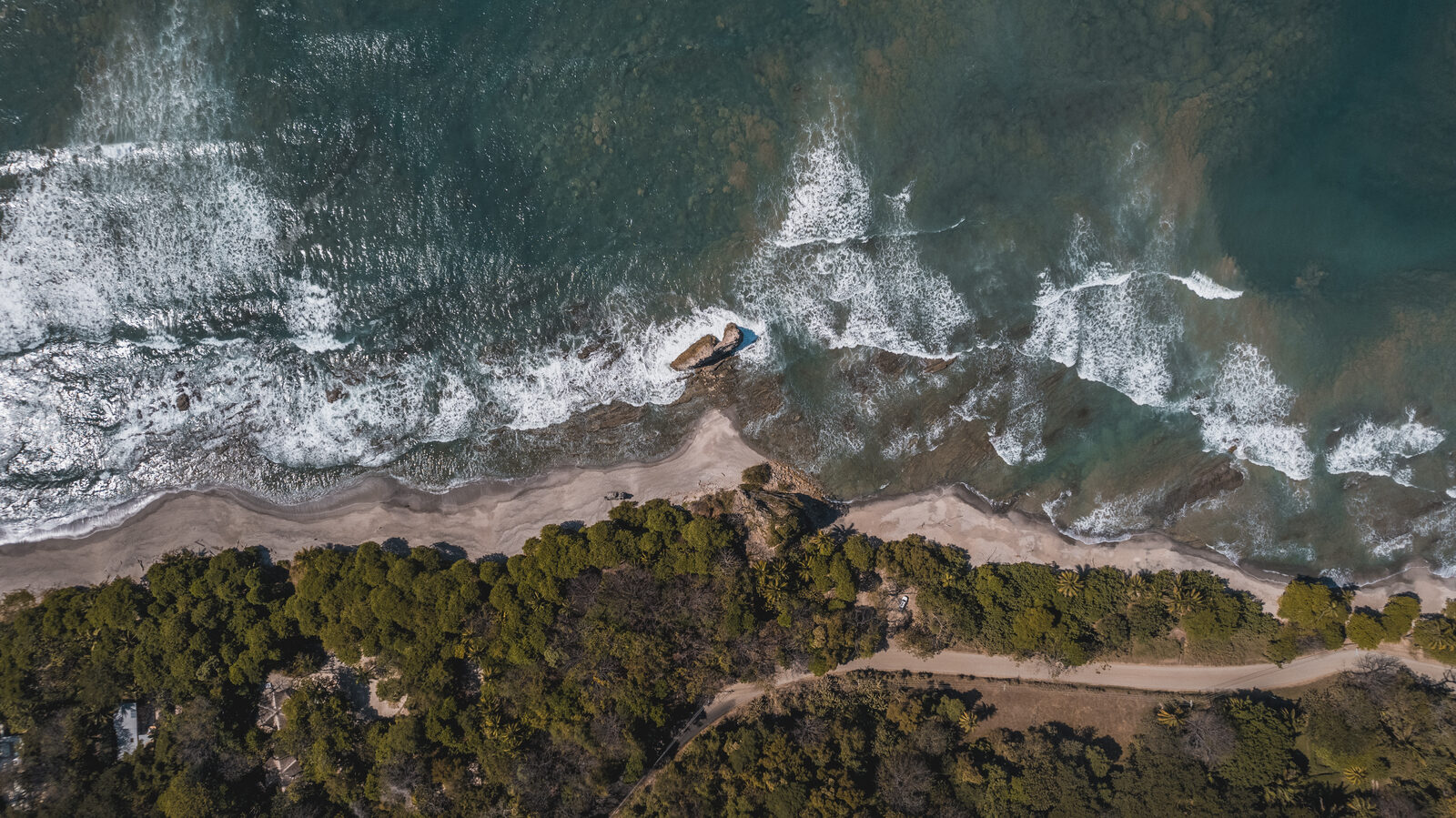
Most guests who stay near Jacó find out about the sea turtles the same way: someone mentions it offhand. “Oh, you know turtles nest right there on that beach?” And then they spend the next two days trying to figure out whether it’s real, when exactly, and how to make it happen.
It’s real. Playa Hermosa (the dark-sand surf beach 10 minutes south of Jacó) is a protected olive ridley sea turtle nesting site, managed under the Refugio Nacional de Vida Silvestre Playa Hermosa–Punta Mala. Every year from August through December, female olive ridleys that hatched here decades ago return to lay their eggs on the same stretch of coast. It happens at night. It’s one of the most unusual things you can witness on Costa Rica’s Central Pacific.
Note: Beach length estimates for Playa Hermosa vary from 10–13 km depending on the source.
This guide covers everything: which turtles, what season, where on the beach, how to watch without causing harm, and how to book a guided tour. The kind of detail that makes the difference between showing up on the wrong night and actually seeing something.
Why Playa Hermosa
There’s no shortage of sea turtle beaches in Costa Rica. Tortuguero, on the Caribbean coast, is the famous one: three species, mass nesting events, formal conservation infrastructure. But for anyone staying in the Central Pacific corridor, Playa Hermosa is a 10-minute drive, not a 4-hour journey.
What makes Playa Hermosa specifically worth knowing about is the official protection status. The Refugio Nacional de Vida Silvestre (National Wildlife Refuge) covers the beach and surrounding habitat from Punta Mala to the mouth of the Río Tulín. Within the refuge, fishing, camping, lighting fires, and removing any native species are prohibited. The primary purpose of the refuge is explicitly the protection of the olive ridley turtle. This isn’t a beach where turtles occasionally show up. It’s a beach managed around them.
The nesting population here is not a mass arribada on the scale of Ostional in Guanacaste, where hundreds of thousands of turtles nest simultaneously. Playa Hermosa sees individual nesters and small groups, which actually makes the experience more intimate. You’re watching a single turtle, close and unhurried, rather than a spectacle from a distance.
The Species: Olive Ridley Sea Turtles
The olive ridley (Lepidochelys olivacea) is the world’s most abundant sea turtle, which masks how extraordinary it is to watch one nest. These animals navigate the open Pacific using Earth’s magnetic field, returning after years at sea to within a few hundred meters of the beach where they hatched. The one you’re watching may have first entered the ocean on this exact stretch of sand 20 or 30 years ago.
Olive ridleys are small by sea turtle standards: adults weigh roughly 80–100 lbs and measure about 2.5 feet in shell length. They’re named for their distinctive olive-grey coloring. On land, they move deliberately and methodically, pulling themselves up the sand with their front flippers, digging the nest cavity with their rear flippers, and laying around 100 eggs before covering the nest and returning to the water.
The occasional leatherback turtle (Dermochelys coriacea) has also been documented at Playa Hermosa, the world’s largest sea turtle, which can exceed 1,000 lbs. These sightings are rare (perhaps a few per season). Pacific green turtles (Chelonia mydas) also nest within the refuge, primarily in the Punta Mala sector, a third endangered species, less commonly encountered on the main Hermosa beach. Plan for an olive ridley experience. The others are a bonus.
Nesting Season: August Through December
The main nesting season at Playa Hermosa runs August through December, with the peak in September and October. This is when sightings are most frequent and guided tours are running regularly.
August marks the beginning: turtles are appearing but the season is ramping up. September and October are when your odds are highest. November still sees active nesting alongside early hatching. By December, nesting activity is winding down, but hatchlings are emerging from nests laid two months earlier.
Speaking of hatchlings: baby turtles emerge from the nest 45–55 days after laying, which puts the main hatch window from October through December. A baby turtle release: dozens of palm-sized hatchlings scrambling toward the waterline at dawn: is a different experience from watching a nesting female, and arguably more moving. If you’re traveling between October and December, you have a real shot at both.
Timing within the season matters too. Nesting activity concentrates around new and full moons, when higher tides push further up the beach and create favorable conditions for the turtles’ emergence. The calendar is not precise, a turtle doesn’t check the phase, but the pattern is real enough that most guides factor moon cycles into their planning.
Watching Responsibly: The Rules That Actually Matter
Olive ridley turtles are protected under Costa Rican law and international conservation agreements. More practically: a disturbed nesting turtle will abort the attempt. She’ll return to the water and may not nest that night, which is a direct conservation impact, not just a missed viewing.
The rules are straightforward:
No white light on the beach at night. Not flashlights, not phone screens, not camera flashes. Turtles navigate by bioluminescence and moonlight; white light disorients them during emergence. Guides carry red-filtered lights, which turtles cannot perceive. Turn your phone face-down in your pocket before you reach the water.
Approach from behind, never in front. A turtle emerging from the water is at her most stressed and most likely to turn back. Once she’s settled into digging (you’ll know because she’ll be fully focused on the sand) she’s in a committed state and can be observed from a respectful distance. Your guide manages this.
Don’t touch the turtle, eggs, or nest. The refuge designation prohibits removing any native species, which includes eggs. The instinct to help is understandable; the help is not welcome and is legally prohibited.
Keep voices low. This sounds obvious until a group of people see something remarkable together and forget. Turtles respond to vibration and disturbance; quiet matters.
Stay behind the roped areas. During nesting season, conservation staff mark active nesting zones. These boundaries exist to protect both the nests and the turtles’ return paths to the water. Walk around, not through.
Conservation volunteers and rangers monitor the beach during season. Nests are excavated, eggs counted, and relocated to a protected hatchery area to prevent poaching: sea turtle eggs are still illegally harvested in parts of Costa Rica, and the refuge’s monitoring program is a direct countermeasure.
What Time of Night
The short answer: after dark, tide-dependent.
Turtles almost never emerge during daylight. The nesting window typically runs from roughly 8 PM to 2 AM, with the most activity in the first half of the night. Guided tours from Jacó typically depart around 7:00–7:30 PM and operate through to midnight or so.
The arrival time shifts nightly because turtles emerge closest to high tide, and high tide advances roughly 50 minutes each day. Your guide will have checked the tide tables. Tours that don’t mention tides are worth asking about.
Once a turtle does come ashore, the full sequence: emergence, climb up the beach, nest site selection, digging, laying (~100 eggs), covering the nest, return to water: takes 1 to 2 hours. You’re not standing in the dark for five minutes hoping something happens. The viewing window, once a turtle commits, is long enough to actually observe the whole process.
Guided Tours
Going with a guide isn’t just the responsible choice. It’s the practical one. Guides know which sections of the beach are active on a given night, how to position the group without interfering, and when to hold back and when to approach. A group that shows up independently with white flashlights is more likely to abort a turtle’s nesting attempt than to witness one.
Tours run from Jacó during the August–December season. The going rate is $45–$50 USD per person, which typically includes transportation from Jacó, a licensed guide, and sometimes a brief introductory briefing before entering the beach. Private tours for smaller groups are available and worth the price if you want more flexibility and a slower pace.
When booking, ask:
- Is the guide SINAC-authorized or affiliated with the refuge’s conservation program?
- Does the tour use red lights only?
- What’s the group size? (Under 10 is good; over 15 gets complicated on a dark beach)
Your Nest Stays concierge can connect you with vetted operators. If you’re booking independently, look for operators explicitly associated with the Refugio Nacional de Vida Silvestre program. Tours booked through the Jacó-area operators affiliated with the refuge are the ones where your fee also supports the monitoring and anti-poaching work.
Volunteer programs run through the refuge during nesting season as well: if you want a more immersive experience (tagging, nest data collection, hatchery work), organizations like Volunteerworld list multi-week programs at Playa Hermosa that offer access beyond what a one-night tour provides.
What to Combine It With
Playa Hermosa after dark is one thing. Playa Hermosa the rest of the time is another experience entirely, and the two pair well.
During the day: The same beach hosts one of Costa Rica’s most consistent surf breaks: it earned World Surfing Reserve designation in 2022, the first in Central America. See the complete surf guide for what that actually means in the water. If you surf at an intermediate or advanced level, an afternoon in the water followed by a turtle tour that evening makes for one of the more memorable 24-hour windows in the Central Pacific. Even if you don’t surf, walking the black sand beach, watching the lineup, and understanding the wave you’ll stand beside in the dark gives the place a context that makes the nighttime stranger and better.
Wildlife beyond turtles: Playa Hermosa sits inside the corridor connecting Carara National Park to the north and Manuel Antonio to the south. Scarlet macaws fly over the beach in the late afternoon. Howler monkeys work the trees behind the shore most mornings. Iguanas are everywhere. The combination of daytime wildlife corridor and nighttime turtle watching is one of the better arguments for basing yourself at Playa Hermosa rather than Jacó during your stay.
Sunset, then dinner, then turtles: The western exposure here produces real sunsets, the horizon is unobstructed Pacific. Beach restaurants along the strip handle the dinner window. Then back on the beach after dark with your guide. It’s a full day built around one stretch of coastline.
For the Playa Hermosa area overview, or browse our activities and wildlife hub for more experiences nearby: Accommodation options, beach access points, and logistics.
Practical Tips
What to wear: Dark clothing. Light colors are more disorienting to turtles than dark ones when you’re moving on the beach. Long sleeves and long pants are also practical: the beach at night in green season (August–December) has mosquitoes, and you’ll be standing still for a while.
What to bring:
- Red-filtered flashlight or headlamp: most tour operators provide one, but having your own is better
- Bug spray with DEET (essential in September and October)
- A light jacket or layer for standing still on a breezy beach after 10 PM
- Camera with manual settings if you want to photograph: turtle photography at night without flash requires a higher ISO and patience, and the results are hit or miss. Honestly, the experience is better with your eyes than through a viewfinder.
Getting there from Jacó and Los Sueños:
- From Jacó central: ~10 minutes south on Route 34 (Costanera Sur), clearly signed
- From Los Sueños/Herradura: ~15 minutes south on Route 34
- If you’re on a guided tour, transportation from Jacó is typically included
- If self-driving: the southern end of Playa Hermosa, near Punta Mala, is where the refuge monitoring station is located
Book in advance during September and October: Peak nesting season sees the best tours fill up. Book at least a few days ahead, not the afternoon you decide to go.
Frequently Asked Questions
When is the best time to see sea turtles nesting at Playa Hermosa?
September and October are peak months, with regular nesting activity and tours running frequently. August is the start of the season and December is the tail end. If you’re visiting specifically for turtles, target September–October. If hatchlings are the priority, October–December is when baby turtles are emerging from nests.
Do I need a guide, or can I walk the beach on my own?
You can walk the beach, but going with a licensed guide makes a significant difference: both for what you’ll see and for the turtles’ protection. Guides know which sections are active each night, position groups correctly, and carry red lights. A group that shows up with white flashlights is more likely to abort a turtle’s nesting attempt than witness one. The guided tours also directly fund the conservation monitoring program. Worth the $45.
What species of sea turtles nest at Playa Hermosa?
Olive ridley sea turtles (Lepidochelys olivacea) are the primary nesting species. The occasional leatherback turtle (Dermochelys coriacea) has been documented at Playa Hermosa as well, though these are rare, a few per season at most. Don’t plan your trip around leatherback sightings, but know it’s possible.
Is there a guarantee of seeing a turtle?
No: this is wildlife, not an aquarium. Operators with solid track records during peak season (September–October) see a turtle on most tours, but conditions vary. Moon phase, tide timing, and how many females are cycling through that week all play a role. Going on a weekend nearest to the full or new moon improves your odds marginally. More practically: going in October with a good guide is much better than going in August solo.
What happens to the eggs after a turtle nests?
Conservation staff excavate the nest, count the eggs, and relocate them to a protected hatchery area within the refuge. This is a direct anti-poaching measure: sea turtle eggs are illegally harvested in some parts of Costa Rica, and moving nests to a secured hatchery dramatically improves hatch rates. The hatchery also makes hatchling releases safer to facilitate.
Can I watch baby turtles being released?
Yes, if your timing is right. Baby releases happen at dawn during the October–December window. These aren’t announced far in advance because hatch timing is approximate. Your best approach is to tell your guide or concierge that you’re specifically interested in a hatchling release: they’ll know when nests are close to hatching and can flag the timing. Set your alarm for a lot earlier than you normally would.
Ready to Experience Playa Hermosa?
Book your Playa Hermosa vacation rental with Nest Stays — and wake up right where the action is.