Carara National Park: A Visitor's Guide from Jacó & Los Sueños
At around 5:45 AM, before the park gates even open, you’ll sometimes spot them over the Tárcoles River: scarlet macaws flying in pairs, low and loud, crossing from their roosting trees on the south side to feeding grounds on the north. If you’re on the bridge at that hour, you’ll also be looking down at American crocodiles the size of canoes. It’s a lot to take in before coffee.
Carara National Park sits 25 minutes north of Jacó and 10 minutes from Herradura, on Route 34 where the jungle meets the coast. It’s the most accessible serious wildlife park in Costa Rica’s Central Pacific region, and it’s one of the few places where the dry Pacific forest transitions into wet rainforest. That ecological boundary is why Carara has a disproportionate number of species for its size: over 400 bird species, crocodiles in the lagoon, and resident populations of monkeys and sloths.
This is the day trip our guests ask about most. Here’s exactly what to know before you go.
The Basics: Fees, Hours, and Getting There
Entrance fee: $10 for foreign adult visitors, $5 for foreign children (ages 2–12; under 2 free), ₡1,000 (about $2) for Costa Rican residents. Tickets must be purchased in advance online at serviciosenlinea.sinac.go.cr. SINAC moved to online-only ticketing in September 2023, and there is no walk-up window at the park. Buy your ticket before you drive out, or you’ll turn around empty-handed.
Opening hours: 7:00 AM to 4:00 PM during dry season (December–April); 8:00 AM to 4:00 PM during rainy season (May–November). The park closes at 4 PM sharp. Give yourself enough time to complete your trail before then; rangers start ushering people out around 3:30.
Getting there: From Herradura, it’s about 10 minutes north on the coastal highway. From Jacó, plan 25 minutes. From Los Sueños Resort, you’re looking at 20-25 minutes depending on traffic through town. There’s a signed parking area at the main entrance on the right side of the highway.
The entrance station is on the same road as the Tárcoles crocodile bridge. Coming from Jacó, you’ll reach the park entrance first; the bridge is about 2 km further north. Stop there on the way back (it’s 2 km further north), or detour up before the park if you’re arriving early enough for the macaw flight show (more on that below).
The Three Trails
Carara has three trails. They’re not all equal, and which one you choose changes your day significantly.
Laguna Meandrica Trail — Do This One
This is the 4.5 km loop that gives you the full Carara experience. It crosses the park’s main suspension bridge over a river channel, loops around the oxbow lagoon (where the crocodiles live), and passes through primary rainforest with a dense canopy.
Budget 2.5 to 3 hours for this trail, more if you stop often. The path is well-maintained but rooted and uneven in places, so closed-toe shoes matter. The bridge is one of the best birdwatching spots in the park — macaws fly over it at dawn and dusk, and mixed species flocks pass through the canopy throughout the morning.
The lagoon section is where wildlife sightings concentrate. Crocodiles are reliably visible from the elevated trail above the water. Monkeys work the fig trees. Sloths hang in the cecropia trees at the water’s edge, and you’d walk right past them without a guide.
This trail is the reason to come to Carara. If you have time for one, make it this one.
One important caveat: the trail closes in September and October due to flooding from heavy rains. Visiting during those months means you’re limited to the Universal Access Trail and Quebrada Bonita, so plan accordingly.
Universal Access Trail — Short, Wheelchair-Friendly, Still Worth It
The Universal Access Trail is 1.2 km, paved, and flat enough for wheelchairs and strollers. It runs from the main entrance through primary forest to a viewpoint of the lagoon.
Don’t underestimate it because it’s short. The primary forest here is tall and dense, and early morning birding on this trail can be excellent. Toucans, aracaris, and parrots use the forest edge near the entrance. The lagoon viewpoint gives you a look at the same crocodiles without the full loop.
For families with young kids or guests with limited mobility, this is the practical choice. It’s also a good warm-up before attempting the longer loop.
Quebrada Bonita Trail — The Shorter Loop
This trail is less frequently discussed, and that’s partly because it offers a step down from Laguna Meandrica in terms of wildlife encounters. It’s a shorter loop, good if you’re time-limited or simply want a quieter alternative with fewer other visitors.
If you can only afford an hour and want more than the Universal Access trail, Quebrada Bonita works. Otherwise, go straight to Laguna Meandrica.
Wildlife: What You’ll See and Where
Scarlet Macaws
This is the headline species and the main reason birdwatchers drive from San José for the day. Carara hosts one of the largest stable populations of scarlet macaws on Costa Rica’s Pacific coast.
They’re most reliably spotted at dawn and dusk when they fly between roosting and feeding areas. The Tárcoles River bridge is the single best viewing point: arrive around 5:30-6:00 AM and watch them cross in pairs overhead. Inside the park, the suspension bridge on the Laguna Meandrica trail is another prime spot. Midday, they’re harder to find in the canopy.
If macaws are your priority, go early. The park opens at 7 AM in dry season (December–April) and 8 AM in rainy season (May–November). Either way, get to the Tárcoles bridge by 5:30-6:00 AM for the pre-park flight show, then head to the entrance when the gates open.
Crocodiles
The lagoon holds American crocodiles, and they are not subtle about it. From the elevated sections of the Laguna Meandrica trail, you’ll look straight down at them basking on the banks. Some are very large — 4 meters is not unusual. Stay on the trail. The Tárcoles bridge stop (see below) offers another reliable croc sighting before or after the park.
Monkeys and Sloths
White-faced capuchin monkeys travel through the park in troops and are usually noisy enough to announce themselves. They like the fruiting trees along the lagoon trail.
Sloths — both two-toed and three-toed species — live in the park, but you will almost certainly walk past them without help. They blend into cecropia and yagrumo trees completely. If you have a guide, this is where they earn their fee: guides typically spot 3-4 sloths per outing that unguided visitors miss entirely.
Birds Beyond Macaws
Carara’s location at the dry-wet forest transition makes it unusually rich for birding. Expect to see:
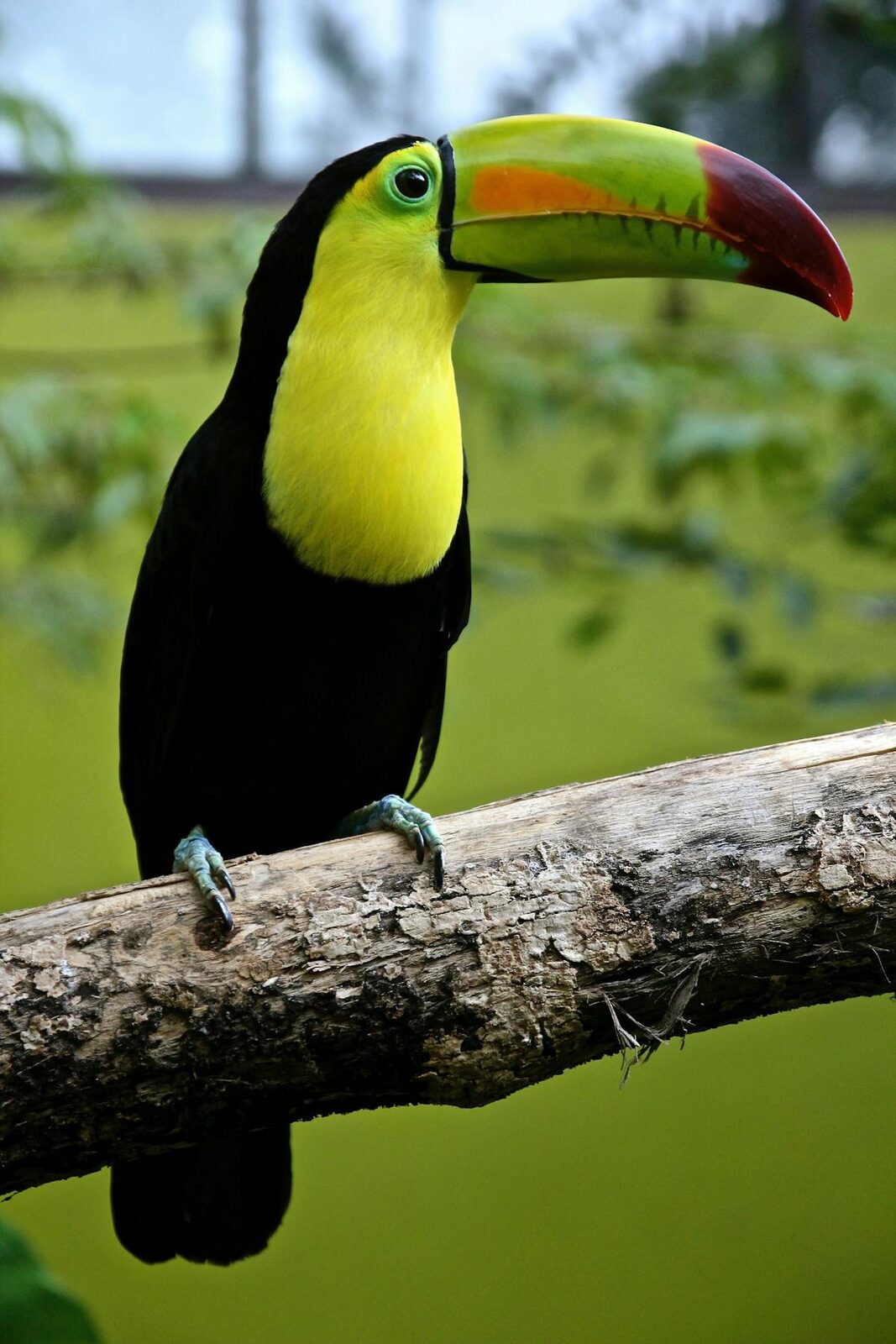
- Chestnut-mandibled toucans: big, loud, and usually high in the canopy but visible
- Collared aracaris: smaller than toucans, travel in groups of 6-10
- Fiery-billed aracaris: endemic to this specific stretch of Central America
- Boat-billed herons: along the lagoon edges, often still enough to miss
- Osprey and black-and-white hawks: hunting over the water
- Various tanagers, manakins, and antbirds: deep in the forest understory, where a guide is genuinely useful
Agoutis and Coatis
Both are common and easy to see. Agoutis look like large, leggy guinea pigs and forage along the trail edges. Coatis travel in groups of females and juveniles and are bold enough to ignore you completely. Don’t feed either — they’re wild animals and park rangers take this seriously.
Stop at the Tárcoles Bridge
Before or after the park, pull over at the Tárcoles River bridge (Puente Tárcoles) on Route 34. It takes five minutes and requires no hiking. Look down into the water and you’ll see crocodiles in numbers that feel almost staged. This stretch of the Tárcoles River is one of the highest concentrations of American crocodiles in Central America.
Go on the right-side railing for the best view. Watch your belongings — the bridge is narrow and there’s regular highway traffic.
The bridge is about 2 km north of the park entrance. Coming from Jacó, you’ll pass the park entrance first; the bridge is another 2 km up the road. Stop here on your way home (heading north back toward Herradura), or make a quick detour before the park if you’re arriving early enough.
Should You Hire a Guide?
Yes, especially if you care about birds or sloths.
Independent guides work outside the park entrance and charge roughly $25-40 per person, depending on group size and tour length. A 2-hour guided tour of the Laguna Meandrica trail with a certified naturalist guide is a meaningfully different experience from walking it alone. They carry scopes, know where the sloth nests are week to week, and can ID the birds you’d otherwise walk past.
If birdwatching is the reason you’re there, budget for a guide. If you’re primarily after the macaw experience and a good jungle walk, the park is navigable and well-signed on your own.
Our team can recommend local guides based on current availability. Ask when you check in.
What to Bring
Water: Bring more than you think you need. The trails aren’t grueling, but the humidity is real and the park doesn’t sell anything once you’re inside.
Closed-toe shoes: Flip-flops are a bad idea on the Laguna Meandrica trail. Trail runners or hiking sandals with straps work fine; full hiking boots are overkill.
Binoculars: If you have them, bring them. If you don’t, seriously consider a cheap pair for this trip. Macaws in the canopy 30 meters up are very different through binoculars versus the naked eye.
Camera: The forest light is challenging. A longer lens helps, but a phone camera works fine for the open lagoon and bridge sections. The deep forest is dim enough to challenge any camera.
Bug repellent and sunscreen: Apply repellent before you enter the forest. The trail edges can have mosquitos, especially near the lagoon. Sunscreen for the bridge and parking area.
Cash: Entrance tickets are purchased online in advance, so no cash is needed at the gate. Bring some anyway for guide tips and anything you stop for on the road.
Best Time to Visit
Time of day: Early morning, without question. Go at opening time: 7 AM during dry season (December–April), 8 AM during rainy season (May–November). Wildlife is most active in the first two hours after opening. By 10-11 AM, most mammals have retreated and the macaws are hard to find. The heat also picks up significantly.
Season: Carara is one of the few Central Pacific parks worth visiting year-round. The dry season (December-April) means less mud on the trails and clearer skies for photos. The wet season (May-November) means lusher forest, more water in the lagoon, and often fewer crowds. The wildlife doesn’t leave; the macaws are resident year-round.
Day of week: Weekdays are noticeably quieter. Weekends bring Costa Rican families and organized tour groups. The early morning advantage is even more pronounced on weekends.
A Note on Combining This with Other Stops
The drive from Jacó north along Route 34 is scenic enough to make a day of it. A few options that work well together:
Tárcoles bridge + Carara + Jacó beach afternoon: The classic. Morning at the park, back to the beach for lunch and the afternoon.
Carara + Manuel Antonio (ambitious): Manuel Antonio is about 90 minutes south of Jacó. A very early Carara visit followed by the drive south is doable but long. We’d only recommend it if you have multiple days in the area and want to compare the two parks.
Carara + Jaco for dinner: Easy. The park closes at 4 PM, you’re back in Jacó by 4:30, which leaves the evening free.
From Our Properties
From our homes in Herradura and Los Sueños, Carara is genuinely ten minutes up the road. It’s the kind of morning trip where you’re back by noon, kids have seen real macaws and a four-meter crocodile, and you still have the pool waiting.
If you want a guide arranged or have questions about timing, our concierge team handles exactly this kind of planning. Just ask when you’re booking or after you check in. We know who shows up, who communicates, and who will actually make your early morning worthwhile.
For more on what to do in the area: Things to Do in Jacó and Day Trips from Jacó and Los Sueños.
Ready to Experience Jacó?
Book your Jacó vacation rental with Nest Stays — and wake up right where the action is.